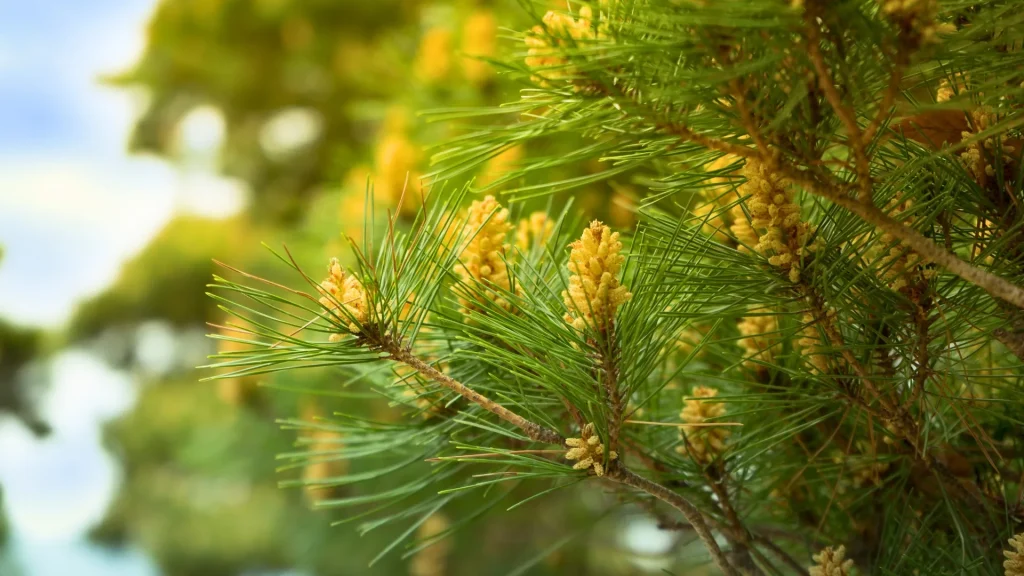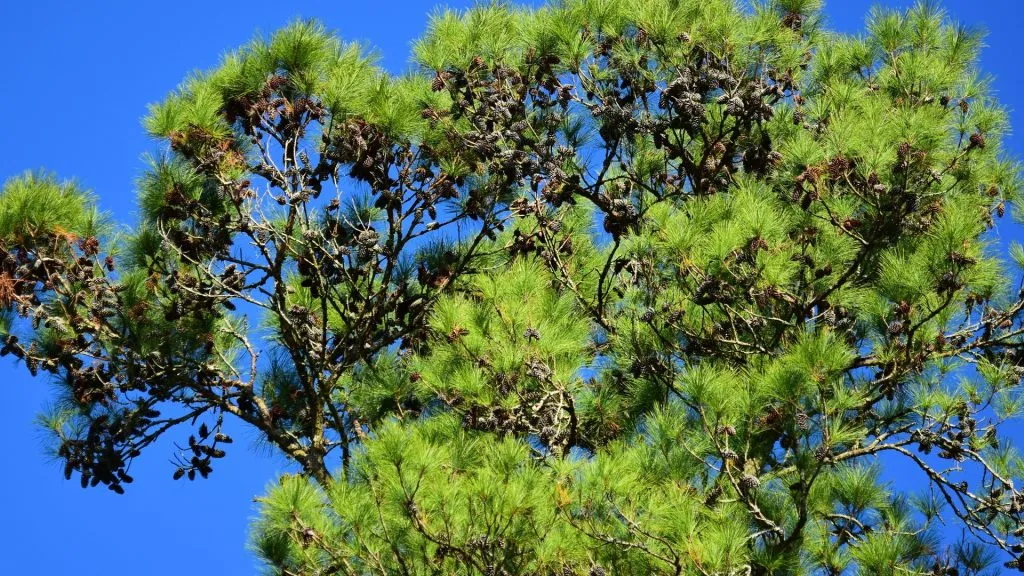
It’s easy for Atlanta-area residents to take pine trees for granted. After all, pines make up a significant percentage of the metro-area tree canopy, and they’re some of the most common trees across the entire region.
If you look out a window right now, chances are you can see at least one, if not several.
So, they often go unnoticed and underappreciated until something goes wrong and treatment, pruning, or removal becomes necessary. That’s why it’s important to monitor your pines regularly and seek professional help at the first sign of trouble.
There are a variety of things that can endanger your pines, but in the metro area, bark beetles are among the most serious threats. We’ll explain everything you need to know about Atlanta’s most common bark beetles below, so you’ll know how to support your trees.
Pine Bark Beetles in Atlanta: The Basics
There are five different bark beetle species commonly found in the Atlanta area. And while they’re all broadly similar, they each exhibit important differences in terms of lifecycle, host preference, and the relative threat level they present.
Southern Pine Beetle (Dendroctonus frontalis)
Far and away the biggest threat to Atlanta-area pines, the southern pine beetle (SPB) is the only native species that commonly attacks healthy, vigorous pines. And when enough beetles attack a tree at once, they can overwhelm its natural defenses and kill it surprisingly quickly.
It is often associated with large-scale outbreaks, which ominously move across the landscape, leaving large patches of dead pines in their wake.
Like most bark beetles, southern pine beetles kill trees by boring through the bark and constructing winding galleries in the inner bark, where they lay their eggs. These galleries disrupt the tree’s ability to transport nutrients, leading to decline and, often, the eventual death of the tree.
Black Turpentine Beetle (Dendroctonus terebrans)
Unlike southern pine beetles, black turpentine beetles generally focus on pines that are already stressed, damaged, or declining. They are particularly likely to attack trees following construction damage, drought, lightning strikes, fire, or other disturbances. Freshly cut stumps can also attract them.
Black turpentine beetles are the largest of Atlanta’s common pine bark beetles, and they typically attack the lower portion of the trunk rather than spreading throughout the tree.
Fortunately, black turpentine beetle infestations often involve relatively few beetles (relative to the southern pine beetle). This means that otherwise healthy trees can often survive their attacks, making this species considerably less dangerous than the southern pine beetle.
Small Southern Pine Engraver (Ips avulsus)
As its name suggests, the small southern pine engraver is the smallest of the three Ips species commonly found in the Atlanta area. Like other Ips beetles, it primarily attacks stressed, weakened, damaged, or recently felled pines rather than healthy, vigorous trees.
Further distinguishing them from their close relatives, these beetles tend to colonize smaller branches and the upper portions of pine trees. They’re thought to prefer these locations because the bark there is relatively thin.
However, large-scale infestations can involve attacks to other portions of the tree. This is especially true for trees that are already stressed by droughts, severe weather, construction, or other disturbances.
Eastern Five-Spined Ips Beetle (Ips grandicollis)
The eastern five-spined Ips is larger than the small southern pine engraver, but like its more diminutive relative, it tends to focus on stressed and damaged pines. It also colonizes freshly cut pine material, which can allow populations to grow following storms, pruning, land clearing, or other disturbances.
Because it is intermediate in size among Atlanta’s three common Ips species, the eastern five-spined Ips generally attacks portions of the trunk and larger branches with bark of intermediate thickness. This can be a useful identification characteristic to consider when facing a beetle-infested pine.
As with the other Ips beetles, maintaining vigorous trees and promptly addressing fresh pine debris can help reduce the likelihood of damaging infestations.
Six-Spined Ips Beetle (Ips calligraphus)
The six-spined Ips is the largest of Atlanta’s three common Ips engraver beetles.
Like most other Ips beetles, it generally prefers to feed upon weakened or stressed pines. This allows it to take advantage of trees suffering from drought, storm damage, root disturbance, construction injury, or other sources of stress.
The six-spined Ips beetle’s larger size allows it to colonize the thicker bark found on the trunks and larger portions of mature pines. Although it usually serves as a secondary pest, local populations can explode when lots of freshly cut pine material is available, which raises the threat level it poses.

Which Atlanta-Area Pines Are Most at Risk from Bark Beetles?
Bark beetles don’t threaten all pines equally. The relative risk your pines face varies based on their health, location, and species, among other factors.
- Health: Trees stressed by recent drought, construction, pest attacks, or disease are generally at increased risk of bark beetle attack. This highlights the importance of preventing damage and providing the support needed to keep your pines vigorous.
- Location: Pines growing in close proximity to other pines are often at elevated risk of infestations, and this is especially true of trees growing near pines that have recently been pruned or removed. Pines located in areas adjacent to a SPB attack are at extremely high risk.
- Species: Unfortunately, all three of the common pines in the metro area — loblolly (Pinus taeda), shortleaf (P. echinata), and Virginia (P. virginiana) — are very susceptible to southern pine beetles. White pines (P. strobus) and longleaf pines (P. palustris) are less susceptible.
Signs and Symptoms of Bark Beetle Infestation
Bark beetle infestations can cause several different signs and symptoms, and the exact appearance will vary depending on the beetle species involved and the severity of the attack.
Some of the most important things to monitor your pines for include:
- Pitch Tubes: Resin may ooze from beetle entrance holes, forming visible masses called pitch tubes. Their appearance varies by species: SPB pitch tubes are typically small and popcorn-like, while black turpentine beetles produce much larger pitch tubes near the base of the trunk.
- Boring Dust: As adult beetles tunnel through the bark, they may produce fine reddish-brown boring dust. You may see boring dust collecting in bark crevices or piling up around the base of the tree. You may also notice it accumulating on nearby spiderwebs.
- Fading Needles: Beetle attacks may cause the crown of infested pines to change from green to yellow before eventually turning brown. Unfortunately, by the time widespread crown discoloration becomes obvious, the beetles may have already completed their development.
- Bark Galleries: Removing loose bark from an infested pine may reveal galleries — tunnels created by adult beetles and their larvae. Gallery layout varies by species; southern pine beetles produce S-shaped galleries, while Ips beetles construct galleries that radiate away from a central area.
- Small Holes in the Bark: Though not always as obvious as pitch tubes or boring dust, small holes in the bark are often a relatively easy clue homeowners can spot. They’re created when a new generation of adult beetles develops and chews through the bark, leaving small holes behind.
- Sudden Decline or Death: Heavily infested pines can decline rapidly, particularly during a SPB outbreak. Several neighboring pines declining or dying in succession is especially concerning and may indicate that an infestation is spreading.
Keep in mind that bark beetles are not the only problems capable of causing thinning crowns, discolored needles, or declining pines. Drought, root damage, disease, construction injury, and other problems can produce similar symptoms.
This illustrates the importance of having an ISA-certified arborist inspect any trees showing these signs or symptoms.
Bark Beetle Management & Treatments: Protecting Your Pines
Unfortunately, there is no simple treatment that can save every pine once bark beetles have successfully colonized it. The appropriate response depends on the beetle species involved, the extent of the infestation, and the condition of the affected tree.
The basic treatment and management options include:
- Removing infested trees. Pines successfully colonized by southern pine beetles or Ips beetles generally cannot be saved and should be removed before emerging beetles can attack nearby trees. During SPB outbreaks, removing a buffer of healthy trees may also slow the spread.
- Applying insecticides when appropriate. Preventive insecticide treatments can sometimes protect valuable pines that haven’t yet been infested. Insecticides may also be useful for managing black turpentine beetle infestations in some cases.
- Keeping pines healthy. Vigorous pines are better able to defend themselves with resin. Providing supplemental water during droughts, minimizing root and trunk damage, and addressing other sources of stress can all help reduce vulnerability.
- Managing fresh pine material. Because bark beetles may be attracted to fresh pine material, it’s important to remove or properly manage storm-damaged limbs and recently cut wood before the insects begin using it to breed.
Ultimately, bark beetle management starts with correctly identifying the beetle involved and determining whether the tree can realistically be saved.

Atlanta-Area Pines & Bark Beetles: FAQ
Bark beetles can be confusing for homeowners, especially because several different species attack Atlanta-area pines and require different management approaches. Below, we’ve answered some of the most common questions homeowners have about bark beetles and the threat they pose to our trees.
Can bark beetles kill a healthy pine tree?
Yes. Southern pine beetles can successfully attack and kill healthy, vigorous pines, particularly when beetle populations are high. Ips and black turpentine beetles, on the other hand, are much more likely to attack trees that are already stressed, damaged, or declining.
Which pine trees are most vulnerable to bark beetles?
Susceptibility varies by beetle species, but loblolly, shortleaf, and Virginia pines are particularly vulnerable to southern pine beetles. Species aside, trees that have suffered drought stress, root damage, storm damage, overcrowding, and other problems can be more vulnerable to bark beetle attacks.
Can a pine tree recover from a bark beetle infestation?
Maybe — it depends on the beetle and severity of the infestation. Pines successfully colonized by southern pine beetles or Ips beetles generally cannot be saved. However, trees experiencing minor black turpentine beetle attacks may survive, particularly with proper support.
How quickly can bark beetles kill a pine tree?
Severe bark beetle attacks can kill pines relatively quickly, potentially in a matter of weeks. However, the timeline will vary based on the beetle species attacking the tree, the tree’s condition, and the intensity of the attack.
Do bark beetles spread from one pine tree to another?
They can. Southern pine beetles are particularly notable for producing expanding infestations that spread through groups of susceptible pines. Other bark beetles can also become abundant when storms, drought, or other disturbances create large numbers of stressed trees.
Should a bark beetle-infested pine be removed?
Often, yes. Removing trees with active southern pine beetles or Ips beetle infestations can help eliminate developing beetles before they emerge and attack additional trees. Removal may also be necessary when a dying or dead pine poses an unacceptable risk to people or property.
How can I protect my pine trees from bark beetles?
Keeping pines healthy is one of the best ways to reduce their vulnerability. Avoid damaging their trunks or roots, provide supplemental water during prolonged droughts, and properly dispose of freshly cut pine logs or branches.
Preventive insecticide treatments may also be appropriate for certain high-value trees when the risk of attack is high.

Protect Your Atlanta-Area Pines from Bark Beetles
Whether you’re concerned that your pines are at risk from a beetle infestation or they’re already declining and may require removal, the professionals at AKA Tree Service can provide the guidance, support, and tree-care services you need.
Contact us today to schedule a complimentary evaluation, so you can keep your pines healthy and property safe.
Sources and References
- UGA Extension – “Ips Bark Beetles in the Southeastern U.S.”
Extension bulletin (C1132) on Ips engraver beetles in the Southeast, covering identification, the role of drought and storm-stressed pines in outbreaks, and prevention and salvage guidance.
https://fieldreport.caes.uga.edu/publications/C1132/ips-bark-beetles-in-the-southeastern-u-s/ - UGA Integrated Pest Management – “Coleoptera: Scolytidae”
UGA IPM program article on bark beetles (Coleoptera: Scolytidae/Curculionidae) affecting Georgia pines, covering identification and management within an integrated pest management framework.
https://ipm.uga.edu/2025/08/06/coleoptera-scolytidae/ - Georgia Forestry Commission – “Pine Bark Beetles in Urban Areas” (brochure)
State forestry agency brochure identifying Georgia’s principal pine bark beetles — southern pine beetle, Ips engravers, and black turpentine beetle — with signs of infestation and management guidance for urban and residential settings.
https://gatrees.org/wp-content/uploads/2020/02/Pine-Bark-Beetles-in-Urban-Areas-Brochure.pdf - Forest Pests – “Pine Bark Beetles” (Georgia)
Regional pest-information site profiling Georgia’s pine bark beetle complex, covering identification, host range, and management for southern pine forests.
https://www.forestpests.org/georgia/pinebarkbeetles.html - Georgia Arborist Association – “What Suddenly Killed My Pine Trees?”
Homeowner blog explaining common causes of sudden pine decline in Georgia, including bark beetle attack, and when to bring in a certified arborist.
https://www.georgiaarborist.org/homeowner-blog/what-suddenly-killed-my-pine-trees - Georgia Forestry Commission – “Pine Bark Beetles in Georgia”
State forestry agency page profiling Georgia’s pine bark beetle complex — southern pine beetle, Ips engravers, and black turpentine beetle — covering identification, drought and storm stress as triggers, and management options.
https://gatrees.org/pine-bark-beetles-in-georgia/