Few trees announce spring in Middle Tennessee quite like the flowering dogwood. Its white or pink blooms brighten yards and woodland edges with a show Tennesseans have come to associate with the changing season.
Tennessee is especially well suited to growing dogwoods, with a long growing season and conditions that have helped make the tree an important part of both the state’s landscapes and its nursery industry.
But this Middle Tennessee favorite is vulnerable to dogwood anthracnose, a fungal disease that can progress from spotted leaves and dying twigs to branch and trunk cankers. In severe cases, it can eventually kill the tree.
Understanding how dogwood anthracnose develops can help you spot trouble early and protect your trees.
What Is Dogwood Anthracnose?
A serious disease of flowering dogwoods (Cornus florida), dogwood anthracnose is caused by the fungal pathogen Discula destructiva.
Unlike the more common forms of anthracnose that primarily cause leaf spotting and blight, dogwood anthracnose can also damage a tree’s flower bracts, twigs and branches, leading to dieback and cankers.
As infections progress, cankers may girdle individual branches or even the main trunk, leading to progressive dieback and potentially killing the tree.
| Different Kinds of Anthracnose Dogwood anthracnose should not be confused with spot anthracnose, another disease that causes small lesions on dogwood leaves and bracts but is generally much less damaging. Telling the two apart matters because a dogwood with true anthracnose may need more careful monitoring and management. |
Where Did Dogwood Anthracnose Come From?
Dogwood anthracnose appeared suddenly in the United States in the 1970s.
The disease was first observed on Pacific dogwood (Cornus nuttallii) in Washington State in 1976, followed by the first documented eastern outbreak on flowering dogwood in New York in 1977. It then spread rapidly through much of the native ranges of both species.
Researchers now have strong evidence that D. destructiva is an exotic pathogen that was introduced independently on the East and West Coasts rather than spreading across the continent from a single outbreak.
Genetic research has also detected the fungus in older dogwood specimens from China and Japan, the hypothesized center of origin.
In the eastern United States, the disease moved south along the Appalachian Mountains, eventually reaching Tennessee’s flowering dogwoods.
Why Cool, Wet Weather Favors Dogwood Anthracnose
Dogwood anthracnose develops and spreads most readily during cool, wet weather. The fungus produces spores on infected plant tissue, and splashing rain or overhead irrigation can carry those spores to susceptible leaves and shoots.

Temperatures between about 65 and 75°F combined with moist conditions are particularly favorable for infection and spread. This makes extended stretches of cool, rainy weather an important time to watch dogwoods for developing symptoms.
| Conditions That Increase Dogwood Anthracnose Risk 1. Cool, Wet Weather: Temperatures around 65–75°F combined with moisture favor infection and spread. 2. Shade and High Humidity: Shaded conditions can keep foliage moist and create a more favorable environment for disease. 3. Tree Stress: Drought, winter injury, and other adverse conditions can increase disease severity. 4. Overhead Irrigation: Water splashing onto infected tissue can help disperse spores. |
Which Dogwoods Are Most at Risk of Dogwood Anthracnose?
Susceptibility to dogwood anthracnose varies by species, cultivar, and individual health, though the disease can strike dogwoods of any size or age.
Our native flowering dogwood is particularly vulnerable to dogwood anthracnose, as is the Pacific dogwood (Cornus nuttallii). Kousa dogwood (Cornus kousa) generally shows greater resistance than flowering dogwood, but this varies from one cultivar to the next.
The gray dogwood (Cornus racemosa) and most other “shrubby” dogwoods are less susceptible than the flowering or Pacific dogwoods are.
Susceptibility also varies between cultivars, and some, such as Appalachian Spring dogwood (Cornus florida ‘Appalachian Spring’), appear highly resistant.
| Dogwood | Dogwood anthracnose risk |
| Flowering dogwood (Cornus florida) | Generally susceptible; disease can cause severe dieback and mortality under favorable conditions |
| ‘Appalachian Spring’ flowering dogwood (C. florida ‘Appalachian Spring’) | Resistant to dogwood anthracnose |
| Kousa dogwood (Cornus kousa) | Many cultivars show substantial resistance, but susceptibility varies by cultivar |
| Flowering × Kousa hybrids (C. florida × C. kousa) | Several cultivars have demonstrated resistance, but resistance varies |
Signs and Symptoms of Dogwood Anthracnose
Dogwood anthracnose often begins in the foliage, but the symptoms can progress into shoots, branches, and eventually the trunk.
A few spots on a dogwood leaf aren’t necessarily cause for alarm. Because early leaf symptoms can resemble those caused by other dogwood diseases, it’s important to look at the overall pattern of damage and watch for signs that the disease is moving into woody tissue.
Some of the most important signs and symptoms to look for include:
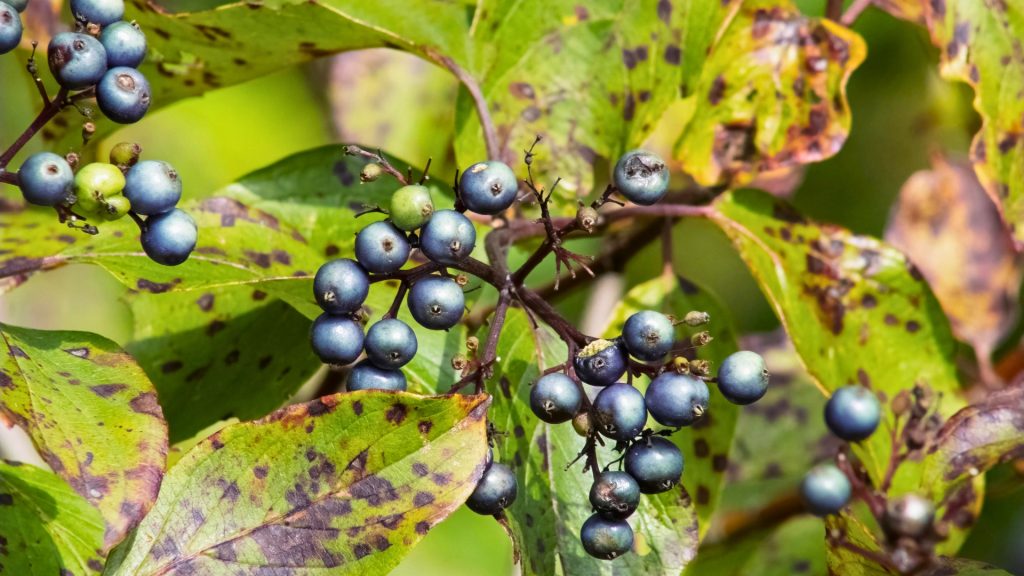
- Leaf Spots and Blotches: Tan or brown lesions often develop along leaf margins or veins and may have reddish-purple borders.
- Blighted or Curled Leaves: Infected leaves may develop larger dead areas, curl, or remain attached to the tree after they die.
- Flower Bract Lesions: Spots or patches may also appear on the showy white or pink bracts surrounding the flowers.
- Twig and Shoot Dieback: As the disease moves beyond the foliage, young shoots and twigs may die back.
- Branch or Trunk Cankers: Sunken or discolored areas can develop on woody tissue. Multiple cankers may eventually girdle branches or the trunk.
- Water Sprouts: Stressed trees may produce clusters of new shoots along the trunk or larger branches.
- Progressive Crown Dieback: In more advanced cases, increasing portions of the canopy may die as infections and cankers accumulate.
Spot anthracnose and other leaf diseases can produce similar-looking symptoms, so any tree showing increasing twig dieback, cankers, or other progressive damage deserves a closer look.
Can a Dogwood Recover From Anthracnose?
A dogwood can recover from anthracnose, particularly when the disease is detected before extensive branch or trunk cankers develop. The outlook depends on how far the infection has progressed, the tree’s overall health, and whether conditions continue to favor the disease.
Trees with primarily leaf and twig symptoms generally have a better outlook than those with extensive branch or trunk cankers. Healthy, well-maintained dogwoods are also better able to withstand infection than trees already under stress. But once cankers have girdled major branches or the trunk, the tree may continue to decline despite treatment.

Dogwood Anthracnose Treatment and Management
Managing dogwood anthracnose usually requires a combination of sanitation, good cultural care, and, in some cases, fungicide treatment. The right approach depends on how far the disease has progressed and the overall condition of the tree.
That’s why it is always wise to contact an ISA-certified arborist at the first sign of trouble with your dogwoods. This way, you can obtain a positive ID of the disease and learn the best approach to managing it.
However, in the meantime, homeowners can take several steps to reduce disease pressure and support affected dogwoods:
- Prune infected growth during dry weather. Remove dead or dying twigs and branches, along with water sprouts that can become infected and provide a pathway to larger branches or the trunk.
- Clean up infected leaves. Rake and remove fallen leaves in autumn, as well as dead leaves that remain attached to branches, to reduce overwintering fungal material.
- Keep stressed dogwoods properly watered. During extended dry periods, provide supplemental water to the root zone and maintain an appropriate layer of mulch without piling it against the trunk.
- Avoid excessive fertilization. Too much fertilizer can encourage succulent new growth that may be more vulnerable to infection.
- Consider professional treatment when appropriate. Fungicides may help protect susceptible new growth, but timing is critical and treatment should be tailored to the tree and level of disease pressure.
For homeowners planting a new dogwood, choosing a disease-resistant species or cultivar can also reduce future problems.
Kousa dogwoods, resistant flowering dogwood selections such as ‘Appalachian Spring,’ and some flowering × Kousa hybrids offer options for landscapes where dogwood anthracnose is a concern.
Professional tree planting can also help ensure a new dogwood starts out in a suitable location with the space and growing conditions it needs.
Dogwood Anthracnose: FAQ
Dogwood anthracnose can raise a lot of questions, especially when symptoms begin appearing on a favorite tree. Here are answers to some of the most common questions about the disease and what it may mean for your dogwood.
Is dogwood anthracnose fatal to dogwood trees?
Dogwood anthracnose can be fatal, particularly when infections spread from the foliage into branches and the trunk. Cankers can eventually girdle woody tissue and cause extensive dieback.
However, not every infected dogwood will die, and the severity of the disease varies with tree health, growing conditions, and how far the infection has progressed.
What is the difference between dogwood anthracnose and spot anthracnose?
Both diseases can cause spots on dogwood leaves and flower bracts, but dogwood anthracnose is the more serious disease.
Dogwood anthracnose can progress into twigs, branches, and the trunk, causing dieback and cankers. Spot anthracnose generally remains a leaf and bract disease and is much less damaging.
When is dogwood anthracnose most active?
Dogwood anthracnose is favored by cool, wet conditions, particularly when temperatures are around 65 to 75°F. Extended periods of moisture allow spores to infect susceptible leaves and shoots and can contribute to continued disease development.
Should I remove a dogwood with anthracnose?
Not necessarily. A dogwood with limited leaf or twig symptoms may still be a candidate for management and preservation.
Trees with extensive dieback or cankers affecting major branches or the trunk should be evaluated individually to determine whether treatment remains practical or removal is warranted.
Can fungicides cure dogwood anthracnose?
Fungicides cannot repair tissue that has already been damaged by dogwood anthracnose, but they may be used to help protect susceptible new growth from infection.
Timing is important, so fungicide treatment is most effective as part of a broader management strategy rather than as a cure for existing damage.
Are any dogwoods resistant to dogwood anthracnose?
Yes. Kousa dogwoods generally have greater resistance to dogwood anthracnose than flowering dogwoods, although resistance varies among cultivars.
‘Appalachian Spring’ is a flowering dogwood cultivar selected and tested for resistance to the disease, and several flowering × Kousa hybrids also offer improved resistance.
Can dogwood anthracnose spread from tree to tree?
Dogwood anthracnose can spread locally as spores from infected tissue are carried by splashing rain or overhead irrigation to susceptible leaves and shoots.
Infected plant material can also contribute to the spread of the disease, making sanitation and careful selection of nursery stock important preventive measures.
Keep Your Dogwoods Blooming for Springs to Come
Flowering dogwoods are part of what makes spring in Middle Tennessee special. When anthracnose threatens a favorite tree, early diagnosis and thoughtful care can give you more options for preserving it.

AKA Tree Service’s ISA-certified arborists can evaluate your dogwood, determine whether anthracnose or another problem is responsible for its symptoms, and recommend a treatment plan based on the tree’s condition.
Contact AKA Tree Service today to schedule your free evaluation and get the right care for your dogwood.
Sources and References
- Tennessee State University Extension — “Dogwood Anthracnose”
Tennessee-specific extension factsheet on dogwood anthracnose, covering symptoms, disease development, favorable environmental conditions, spread, and management recommendations.
https://www.tnstate.edu/extension/documents/Dogwood%20anthracnose%20Factsheet%20Final%2011202017.pdf - Tennessee Department of Agriculture, Division of Forestry — “Anthracnose”
State forestry guidance distinguishing serious dogwood anthracnose from generally less damaging anthracnose diseases, including dogwood spot anthracnose, with information on identification and management.
https://www.tn.gov/protecttnforests/diseases/anthracnose.html - Mantooth et al., PLOS ONE — “Confirmation of Independent Introductions of an Exotic Plant Pathogen of Cornus Species, Discula destructiva, on the East and West Coasts of North America”
Peer-reviewed study examining the origin and spread of the fungus responsible for dogwood anthracnose, including evidence of separate introductions into eastern and western North America and the disease’s impact on flowering dogwoods in the Appalachian region.
https://journals.plos.org/plosone/article?id=10.1371/journal.pone.0180345 - University of Tennessee — “Dogwoods for American Gardens”
Comprehensive guide to dogwood species, cultivars, landscape use, and health problems, including dogwood anthracnose susceptibility, the disease resistance of ‘Appalachian Spring,’ and the influence of growing conditions such as shade, humidity, moisture, and tree stress on disease severity.
https://utia.tennessee.edu/publications/wp-content/uploads/sites/269/2023/10/PB1670.pdf - West Virginia University Extension — “Dogwood Anthracnose”
Extension guidance on dogwood anthracnose symptoms, disease development, resistant dogwoods, and cultural and chemical management, including pruning, sanitation, irrigation, mulching, fertilization, and fungicide treatment.
https://extension.wvu.edu/lawn-gardening-pests/plant-disease/landscape-tree-disease/dogwood-anthracnose