Key Points:
- Atlanta arborists recommend dormant-season tree care between November and March, when structural issues are easy to identify, and pest activity is at its lowest.
- Problems that are hidden by leaves the rest of the year become clearly visible with the branches bare, making winter the best time to engage in proactive tree maintenance.
- Peak-season tree care can be costly and stressful, but scheduling in late fall or early winter helps homeowners avoid the spring rush and get ahead of storm season.
Many homeowners think of tree care as a spring or summer task, even in Southeastern climates where winter weather is mild. While there’s always plenty of landscaping work to be done during the warmer months, late fall and winter are what arborists consider prime season for pruning. Not only are leafless trees easier to assess for structural risks, but trimming while trees are dormant also minimizes stress and reduces the spread of pests and diseases.
Serving the Atlanta metro area in Georgia and the Nashville metro area in Tennessee, AKA Tree Service’s ISA-Certified Arborists protect and maintain our clients’ landscapes. With a staff of fully licensed, bonded, and insured tree care professionals, we aim to deliver exceptional service to local homeowners and businesses all year-round.
Let’s explore the details of dormant season tree care to determine why it’s important, what it involves, and when to consult a professional.
What Is Tree Dormant Season and When Is It?
When temperatures start to drop in the fall, trees go dormant to conserve energy for spring growth. It’s not an overnight process but a gradual slowing of metabolic activity that usually begins with the shedding of leaves. Similar to the hibernation process of some animals, dormancy is a survival mechanism that trees use to wait out the winter.
In the Southeastern U.S., the leaves of deciduous trees typically begin to change between late September and early October. By late November, many trees have gone bare and will remain so until the first buds break in late February or March. This period between November and March is what arborists call the dormant season.
Why Trees Heal Better When They’re Dormant
Though dormant trees don’t exhibit any obvious above-ground growth, that doesn’t mean they’re dead. Many species continue to put out roots until the ground freezes, all the while conserving the energy they would otherwise funnel into leaf production. When things thaw out in spring, they’ll be ready to switch gears and resume above-ground growth.
The perfect time for pruning or trimming is after the tree has gone dormant but before it starts putting out spring buds. It’s healthier and safer to prune a tree in its dormant state than during active growth for the following reasons:
- Lower pest and pathogen activity. Disease vectors like fungal spores and insects are less active during the colder months, which significantly reduces the risk of fresh pruning cuts becoming infected.
- Reduced stress on the tree. Wounds created by pruning take time and energy to heal. Because dormant trees are preserving energy, they are the least stressed in the winter, and this accelerates healing.
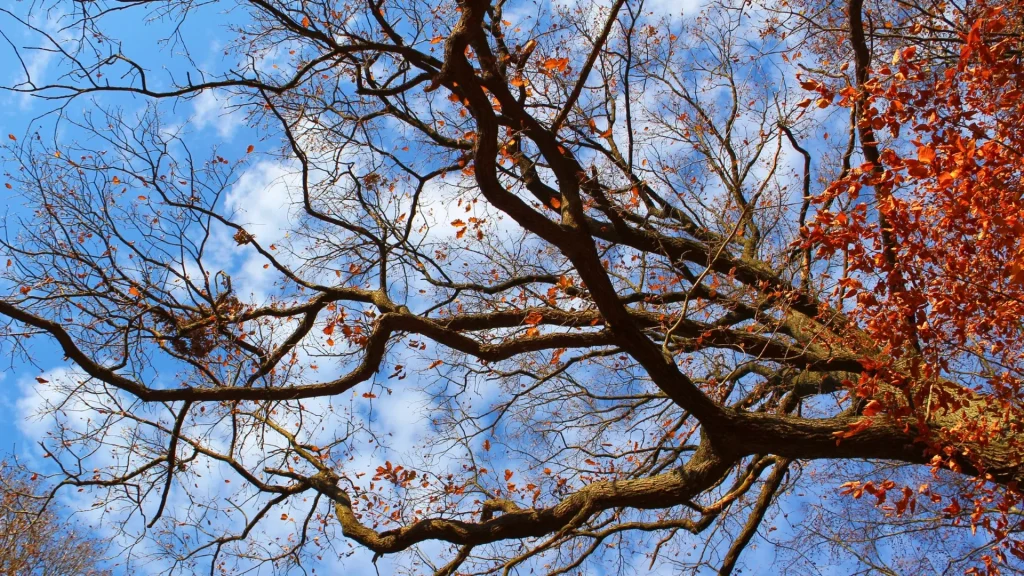
- Greater visibility. Without leaf cover, arborists can more easily see the tree’s whole structure. Bark cracks, cavities, canopy imbalances, and other issues are more identifying in the winter than the spring and summer.
Proper timing is crucial when it comes to pruning, but so is technique. Pruning is best performed by an ISA-Certified Arborist with training from the International Society of Arboriculture. It takes professional expertise to understand branch architecture and identify structural weaknesses, not to mention the specialized skills required to execute clean, precise, and properly placed cuts that won’t cause lasting damage to the tree.
The Practical Benefits of Dormant Season Tree Care
There are also some practical benefits to waiting until the off-season to schedule the bulk of your annual tree care.
Beat Severe Weather Season
Though winters in the Atlanta area tend to be mild, ice storms still pose a significant hazard. In early 2026, for example, the Georgia Emergency Management and Homeland Security Agency (GEMA/HS) reported wind chill temperatures dropping to -15℉ as gusts up to 30 mph blasted through the north and central parts of the state. Amid powerful winds and freezing temperatures, many Georgia residents faced uprooted trees, downed power lines, and property damage in the aftermath of the storm.
Having your trees assessed as soon as they drop their leaves is the key to identifying potential hazards, such as weak limbs or cracked trunks. This gives you time to schedule structural pruning or tree removal before storm season.
Avoid the Spring Rush
In the spring, many homeowners rush to remove storm-damaged trees or address aesthetic concerns in their landscaping. Between steadily rising demand and improving weather conditions, tree care companies book up quickly. Additionally, it’s common practice for companies to charge a premium for evening or weekend emergency service.
Scheduling the majority of your tree care during the dormant months gives you more flexibility and competitive pricing. Rather than waiting for a minor issue to become a major problem, take a proactive approach to tree care to save time and money.

Protect Property Value and Curb Appeal
Many homeowners make the mistake of ignoring their trees until there’s a problem. It’s important to remember, however, that your landscape is constantly growing and changing. A little bit of seasonal maintenance can make a big difference in optimizing tree health and maximizing aesthetic appeal.
Dormant season pruning can help protect the structural integrity of your trees and shape them so they look their best year-round. Healthy, structurally sound trees enhance both curb appeal and property value, so think of routine tree maintenance as a practical investment.
Set Your Trees Up for Strong Growth
There’s simple logic to dormant-season tree care. Over the winter is when trees shift from leaf production to energy storage, so there’s no active growth happening above-ground. Pruning before the tree puts out new buds in spring helps free up resources. That means there won’t be any energy wasted on the growth of branches you’re planning to remove later.
Winter Tree Care Checklist
Dormant season tree care isn’t just about spotting and correcting problems that might worsen over winter. It’s also about optimizing tree health and setting the stage for vigorous spring growth.
Below are some of the most important tasks to include in your winter tree care checklist:
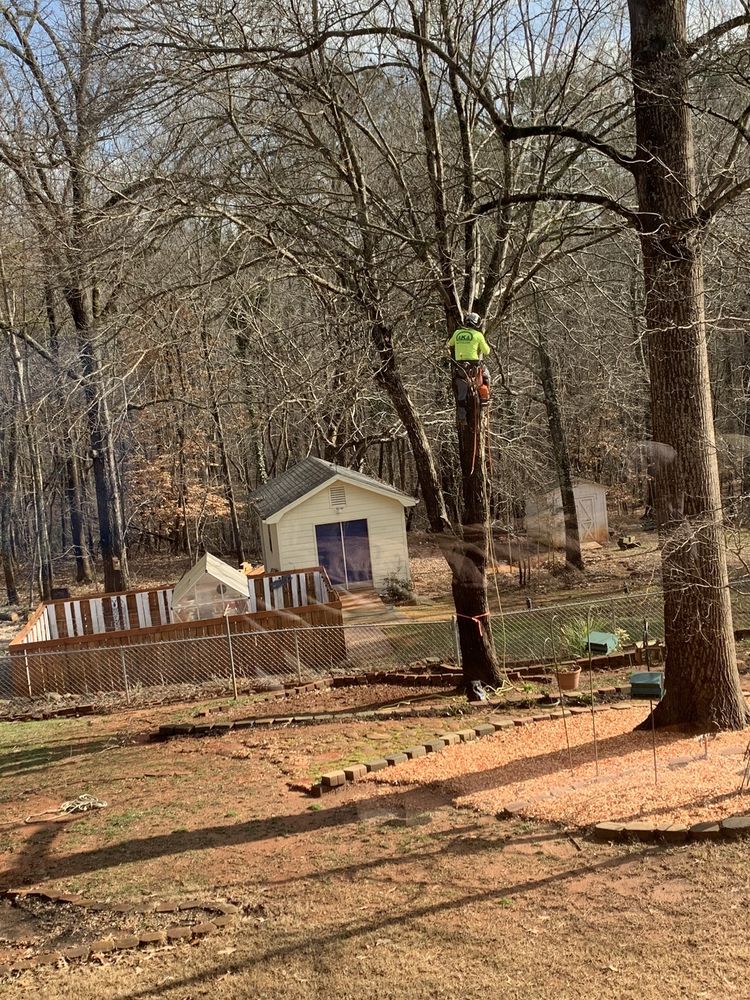
- Structural pruning – Effective pruning involves removing dead, cracked, and crossing branches (especially those overhanging roofs or power lines) to reduce the risk of winter storm damage.
- Tree removal – Removing dead or severely damaged trees during the dormant season minimizes disruption to the rest of your landscaping and creates room for remaining plants to spread in spring.
- Mulching – Apply a 2–4-inch layer of mulch around the dripline (keeping it away from the trunk) to insulate the roots and reduce soil evaporation.
- Deep root watering – Water slowly and deeply around midday when temperatures are above 40℉ to prevent winter desiccation (particularly newly planted trees).
- Trunk wrapping – Using tree wraps or trunk guards helps protect young and thin-barked trees against sunscald, frost cracks, and wildlife damage.
- Pest and disease monitoring – Check for overwintering pests (such as emerald ash borer) and early signs of disease that may worsen as spring weather warms, and take preventive action.
Even if your trees look perfectly healthy by the time summer comes to a close, it doesn’t hurt to have them assessed by a tree care professional. An ISA-certified arborist can inspect your trees to identify safety hazards and determine whether any maintenance is needed.
Schedule Your Winter Tree Care with AKA Tree Service
At AKA Tree Service, our extensive knowledge of native species and local weather patterns positions us to provide next-level support for homeowners in Nashville, Athens, Marietta, and the greater Atlanta metro area.
With 10 fully licensed ISA-Certified Arborists on staff, AKA Tree Service is committed to raising the standard for tree care services, including pest and disease control, tree removal, air spading, and tree risk assessment. We pride ourselves on our professionalism and adhere to the strictest safety protocols in the industry. Whether you’re a homeowner caring for trees in your yard or a business owner managing a commercial property, we’re here to help.
Ready to put your winter tree care plan into action? Schedule a free consultation by calling 404-713-4305 or contact us online today!
FAQs
How do I know if my tree is dormant and ready for pruning?
Many deciduous trees lose their leaves when they go dormant, though some species may drop them slowly over winter instead of all at once in the fall. Arborists generally recommend waiting until late winter (January through early March) to prune trees in Georgia and Tennessee.
What kind of maintenance do trees need during the fall and winter?
Dormant-season tree maintenance typically involves pruning for structural or aesthetic purposes, mulching and watering to protect root health, and monitoring for signs of pests and diseases. Wrapping young or thin-barked trees may also help prevent damage caused by winter weather and wildlife.
Is dormant season pruning only for deciduous trees?
Dormant season is generally the best time to prune most trees, both deciduous and evergreen. In cold climates, heavy dormant pruning in winter can cause evergreens to dry out, but Georgia winters are generally mild enough to minimize the risk. For the best results, lightly prune evergreens (such as pines and hollies) in late winter or early spring, before new growth begins.
Should I prune my own trees or hire a professional?
With the right tools, many homeowners can safely perform light pruning and other winter tree-care tasks. If your trees are in need of significant structural pruning or disease control, however, it’s best to hire an ISA-Certified Arborist. Before you decide whether to prune your own trees, schedule an assessment with a tree care professional to determine what’s needed.