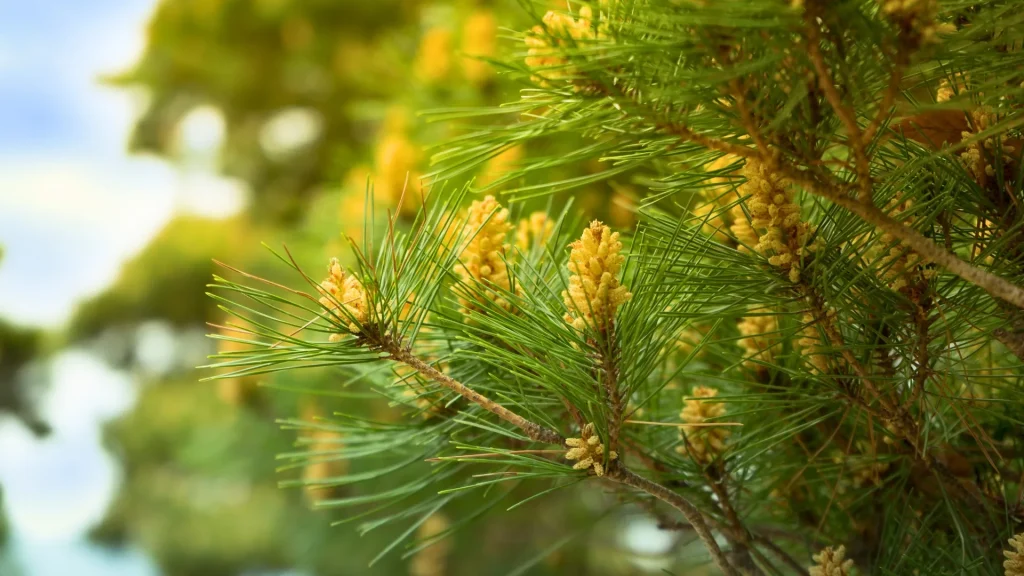
Pines are simply part of the backdrop here in the Metro Atlanta area. They blanket some commercial and residential properties and make an appearance on most others — even those dominated by oaks, sweetgums, maples, and tuliptrees.
But unfortunately, like many of the other familiar trees of our region, pines are vulnerable to a few pests, including a number of bark beetles.
The southern pine beetle (Dendroctonus frontalis) tends to get the majority of the attention, thanks to the incredible economic, ecological, and social impacts it can have. But while you should certainly monitor your pines for this pest, you shouldn’t ignore some of the other bark beetles in our area.
For example, black turpentine beetles and several species of Ips beetles can also cause problems for Metro Atlanta pines. We’ll explain everything you need to know about them below.
Common Pine Trees in the Metro Atlanta Area
Before discussing the threats pines in our area face, it’s important to understand a little about our local pines first. Several species are commonly seen in the Atlanta area, including three that are native to our region and two that are typically associated with other parts of Georgia.
- Loblolly Pine (Pinus taeda): Far and away the most common pine in our area, loblollies are large, remarkably fast-growing pines that may exceed 100 feet in height.
- Shortleaf Pine (Pinus echinata): Though less common than the loblolly, shortleaf pine grows nearly as large, is better adapted to fire and drought, and is clad in deep green needles.
- Virginia Pine (Pinus virginiana): A hardy species that’s common in areas with rocky or poor soil, Virginia pine often develops a gnarled appearance and grows relatively slowly for a pine.
- Eastern White Pine (Pinus strobus): The eastern white pine naturally grows in higher elevations and latitudes, but it is a beautiful species that is occasionally planted in the metro area.
- Longleaf Pine (Pinus palustris): The longleaf pine is primarily a denizen of the Coastal Plain, but you may see it planted from time to time in our region.
All five of these species can suffer attacks from Ips and black turpentine beetles, but their susceptibility varies a bit. Nevertheless, because loblolly pines are the most common pines in our area by an overwhelming margin, we’ll primarily focus on them from this point forward.

Ips Beetles & Black Turpentine Beetles in Metro Atlanta
Ips beetles and black turpentine beetles vary in numerous ways, which we’ll outline below.
However, one of the most important things to understand about them is that — unlike the southern pine beetle, which often kills even healthy pines — they tend to focus their attacks on pines that are already stressed or in decline.
Ips Beetles
Also called Ips bark beetles or Ips engraver beetles, Ips beetles are common tree pests that are native to Georgia, though only three are commonly found in the Metro Atlanta area.
The individual species differ in a few key ways, but they look relatively similar and are brown to gray in color. They’re also very small; the largest rarely measure more than ¼-inch in length.
While they’ll all infest cut pine wood, each species tends to attack a different portion of the pine trees they infest:
- Six-Spined Ips Beetle (Ips calligraphus): These beetles tend to be found under the bark near the lower or middle portions of the trunk, as well as large limbs.
- Eastern Five-Spined Ips Beetle (Ips grandicollis): The eastern five-spined Ips can be found in large limbs and the middle and upper portions of pine trunks.
- Southern Pine Engraver Beetle (Ips avulsus): This beetle is most commonly found in the crown, small to medium branches, and the upper portions of the trunk.
All three species have a similar life cycle. Males seek out stressed pine trees, where they begin feeding and producing pheromones that attract females. Shortly thereafter, females arrive, start creating galleries beneath the bark in the phloem layer, and begin depositing eggs.
As the larvae begin hatching, they create feeding galleries that branch off from the egg galleries, eventually producing the distinctive engraved-looking patterns for which these insects are named.
The shape of these galleries varies a bit from one Ips species to the next, but there is considerable overlap, so gallery shape is typically not a useful criterion for homeowners to consider.
After maturing into adults, the insects tunnel back out through the bark and start the life cycle all over again.

Black Turpentine Beetles
Known to biologists as Dendroctonus terebrans, the black turpentine beetle is like Ips beetles in that it preferentially attacks stressed pines. However, it may occasionally attack and kill healthy trees like its close relative, the southern pine beetle.
Dark reddish-brown to black in color, black turpentine beetles are often easy to distinguish from Ips beetles by their rounded, spineless rear ends. They’re also slightly larger, with some individuals exceeding 1/3 inch in length.
Unlike Ips beetle attacks, black turpentine beetle attacks are initiated by the females (another thing they have in common with the southern pine beetle). After boring beneath the bark of a pine, the female will begin producing pheromones that attract males, who soon join them for mating purposes.
Females lay dozens of eggs over a two-week period after mating. The eggs hatch into larvae, which begin feeding beneath the bark. Notably, black turpentine beetle larvae feed gregariously and produce wide galleries, unlike the tendency of Ips beetles to feed individually.
They’ll often pupate in the bark, though they may do so deeper within the tree at times. After pupating and developing into adults, the beetles will exit the tree and start the process anew.
Ips & Black Turpentine Beetles: Red Flags to Watch For
Both Ips beetles and black turpentine beetles produce relatively similar signs and symptoms of infestations, though there are a few subtle differences.
Homeowners and property managers don’t necessarily need to be able to distinguish the beetle species causing problems, but it is important to take action if you notice any of the following:
- Pitch Tubes: Pitch tubes are masses of resin produced when a pine tries to flush a tunneling beetle out of the bark. They’re often said to appear like popcorn clusters on the bark.
- Boring Dust: As beetles tunnel through the bark, they produce a lot of dust. You may see this dust and frass at the base of the tree, stuck to the bark, or collecting in nearby spiderwebs.
- Needle Discoloration: As a beetle attack progresses, pines often exhibit foliar discoloration. The needles will typically change from dark green to yellowish green to red or brown over time.
- Crown Thinning: Pine trees may also shed large amounts of needles when attacked by bark beetles. This can cause portions of the canopy to appear quite sparse.
- Small Holes in the Bark: Though they’re quite small, emergence holes may occasionally be spotted in the bark of pine trees that are under attack.
- Galleries Beneath the Bark: While you should never remove healthy bark, galleries may be visible beneath patches of failing bark.
If you notice any of these signs or symptoms, you’ll want to contact AKA Tree Service promptly to schedule an evaluation.

Preventing & Treating Ips Beetles & Black Turpentine Beetles
Both Ips beetles and black turpentine beetles can kill pine trees, but there are things you can do to help protect your trees. A few of the best strategies include:
- Reduce sources of tree stress. Because these beetles preferentially attack stressed trees, it’s important to provide your trees with the support they need. This means offering supplemental water during droughts, applying organic mulch over the root zone, and limiting soil compaction.
- Remove cut pine wood from your property. Logs and branches provide breeding sites for these beetles and may attract beetles from surrounding areas. So, have freshly cut pine material chipped, removed, or burned, whenever possible.
- Use preventive insecticides on high-value trees. There are a few insecticides that can offer protection from Ips beetles and black turpentine beetles. However, they are only effective when applied before an attack and rarely feasible for properties with numerous pines.
- Address infested trees promptly. Pines with extensive infestations may be unlikely to recover and can eventually present safety hazards, so pruning or removal may sometimes be appropriate. However, these decisions should only be made in conjunction with an ISA-certified arborist.
Protect Your Pines & Keep Your Property Safe
Whether you have a single pine or dozens, it’s important that you partner with a tree-care team that can provide the guidance and support you need to keep them healthy and safe.
AKA Tree Service provides all of the services homeowners and property managers in the Metro Atlanta area need, from pruning to removals to plant health care services. Contact us today to give your pines the best chance of thriving for years to come.
Sources and References
- University of Georgia Extension – “Ips Pine Beetles”
Extension article on Ips engraver beetles attacking stressed, injured, or drought-weakened Georgia pines, covering signs of attack and prevention through tree-health management.
https://site.extension.uga.edu/tattnall/2025/12/ips-pine-beetles/ - Georgia Forestry Commission – “Pine Bark Beetles”
State forestry agency publication identifying Georgia’s principal pine bark beetles — southern pine beetle, Ips engravers, and black turpentine beetle — with signs of infestation and management guidance.
https://gatrees.org/wp-content/uploads/2020/02/Pine-Bark-Beetles-Brochure.pdf - Georgia Arborist Association – “What Suddenly Killed My Pine Trees?”
Homeowner blog explaining common causes of sudden pine decline in Georgia, including bark beetle attack, and when to bring in a certified arborist.
https://www.georgiaarborist.org/homeowner-blog/what-suddenly-killed-my-pine-trees - Walter Reeves (The Georgia Gardener) – “Identifying Bark Beetles” [title inferred from filename]
Illustrated guide to distinguishing Georgia’s common pine bark beetles by their galleries and attack patterns.
https://walter-reeves.b-cdn.net/wp-content/uploads/2012/11/idbeetles.pdf - Walter Reeves (The Georgia Gardener) – “Bark Beetle Identification” [title inferred from filename]
Bark beetle identification reference hosted on the Georgia Gardener site.
https://walter-reeves.b-cdn.net/wp-content/uploads/2012/11/IDBEET.pdf