5 Pricing Factors
You step into your backyard after a heavy storm and look up at the towering pine leaning a little too close to your roof. Or maybe you have noticed a massive, aging oak slowly rotting near your driveway. When a problematic tree threatens your property in the Southeast, a single question usually comes to mind first: How Much Does Tree Removal Cost?
Understanding your overall tree removal cost is essential for budgeting, but pricing is rarely a simple, one-size-fits-all number. For property owners living in Atlanta suburbs and Nashville suburbs, figuring out the specific variables behind a quote helps prevent unexpected sticker shock. It also ensures you are hiring qualified, safe professionals who will protect your home and landscape during the process.
This guide breaks down the primary factors that influence your final bill. Ranging from tree height and yard accessibility to the tree’s health and whether you need emergency storm cleanup, we will explore exactly what certified arborists evaluate when pricing a job.
1. The Baseline: Average Cost of Tree Removal
When you first begin researching, you will likely find broad national and regional price ranges. Looking at the Average Cost of Tree Removal can give you a helpful baseline expectation for your budget. Generally, standard removals can range anywhere from a few hundred dollars to a few thousand.
However, average ranges are only a starting point. Local market conditions across Georgia and Tennessee heavily influence pricing. More importantly, the specific physical traits of the tree and your property will ultimately dictate your final quote. Relying strictly on a national average might leave you underprepared for the actual expense of safely bringing down a hazardous tree.
2. Tree Height and Size: The Biggest Driver
The physical dimensions of a tree are the most obvious indicators of how much you will pay. A towering hardwood requires entirely different logistics than a small decorative sapling. When assessing a quote, professionals often calculate the Tree Removal Cost by Size, breaking jobs down into standard height categories.
Small trees under 30 feet tall are generally straightforward to handle and take minimal time. Medium trees ranging from 30 to 60 feet require more strategic planning, safety gear, and cleanup effort. Meanwhile, large and extra-large trees exceeding 60 feet demand a robust crew, specialized heavy-duty equipment, and significantly more time to safely dismantle. The larger the tree, the larger the investment required to remove it securely.
3. Location and Accessibility
A tree’s location on your property dramatically impacts the effort and equipment required to remove it. A tree sitting alone in a wide-open front yard is much easier to tackle than one wedged between two houses or hanging over a delicate garden.
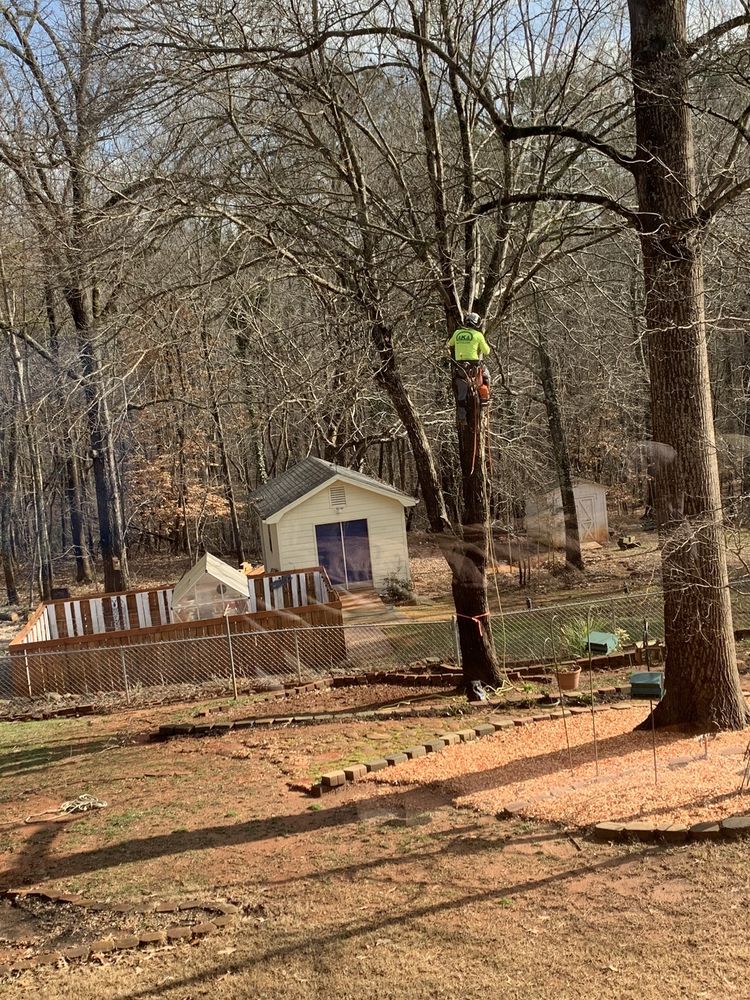
When analyzing tree removal pricing factors, arborists must consider the obstacles surrounding the site. For example, navigating tight property lines and historic fences is a common challenge in Atlanta suburbs like Roswell or Alpharetta. In contrast, crews working in Nashville suburbs like Brentwood or Franklin often have to contend with steep, hilly terrain that makes bringing heavy machinery difficult. Trees located near active power lines, residential roofs, or expensive hardscaping take meticulous planning and specialized rigging equipment to remove safely, which naturally drives up the overall cost.
4. Tree Condition and Risk Level
The internal and external health of the tree directly affects the removal strategy. A strong, healthy tree that simply outgrew its space might actually be easier to climb and dismantle branch by branch. Conversely, a dead, rotting, or hollow tree presents a severe hazard to the crew.
Unstable wood is highly unpredictable and often unsafe for an arborist to climb. To mitigate these dangers, hazardous trees routinely require the use of bucket trucks, aerial lifts, or even cranes to dismantle the structure from the outside in. Using this heavy machinery fundamentally alters the Cost of Tree Removal, as it requires specialized operators and complex logistical planning.
5. Emergency vs. Scheduled Tree Removal
Timing plays a massive role in the final price tag of tree care services. There is a distinct difference between standard, scheduled maintenance and immediate, after-hours emergency removal.
Severe storms, high winds, and heavy rainfall are incredibly common throughout Georgia and Tennessee. If a massive limb crashes through your roof or a toppled trunk blocks your driveway at 2 AM, you need immediate help. The rapid response, heightened danger of working in poor conditions, and after-hours labor will naturally cost a premium compared to a routine removal scheduled weeks in advance.
However, facing a crisis does not mean you should face unfair pricing. AKA Tree Service offers responsive 24/7 emergency tree services to safely handle storm damage without price-gouging. Our crews work quickly and efficiently to clear debris, secure the area, and restore safety to your property when you need it most.
Make the Right Choice for Your Property
Size, location, physical condition, and urgency are the main variables that dictate your final quote. Because every property is entirely unique, the safest and most accurate way to price a removal job is to get an in-person assessment from a licensed professional.
When you need reliable tree care, turn to the experts at AKA Tree Service. With more than 10 ISA-Certified Arborists on staff and a commitment to strict safety protocols, we ensure that every customer can “Cut with Confidence.” We bring the knowledge, top-tier equipment, and professionalism to get the job done right the first time.
Ready to clear your yard safely? Contact us today to schedule your assessment and protect your property.