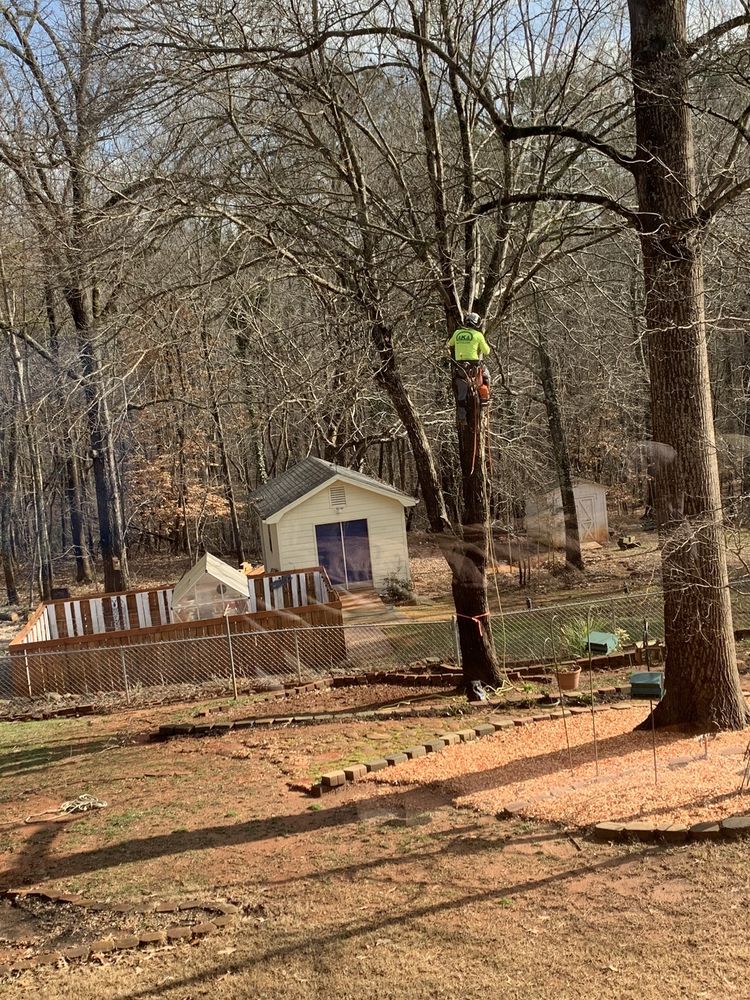
Oak wilt is a serious tree disease that can sometimes kill susceptible trees in a matter of weeks. Losing an oak to this disease not only means losing the benefits the tree provides but may also leave you facing the expense of removing it.
There are a few ways to protect your trees, including one that relates to the timing of pruning work. Simply put, you should try to avoid having oaks pruned during the spring, summer, or early fall.
We’ll explain why warm-weather pruning can be a problem for oaks, and outline some of the other strategies you can use to protect your trees below.
What Is Oak Wilt?
Oak wilt is a fungal tree disease caused by Bretziella fagacearum. Like most other wilt diseases, it disrupts a tree’s ability to transport water from the roots to the crown, resulting in conspicuous wilting, among other symptoms.
Most North American oaks appear susceptible, but those in the red oak group are at much greater risk. Red oaks may die within several weeks of becoming infected, but oaks in the white oak group often suffer from milder symptoms and may remain alive for several years.
The disease was first identified in Wisconsin during the early 1940s, but its known range has expanded considerably in the decades since. It has now been documented in at least 22 other states, and it may already be present in several more.
Oak wilt does not appear to have been positively identified in Georgia yet, but that doesn’t necessarily mean our local oaks are safe. The disease may already be present yet undetected, and if it is not currently present, it may eventually spread from a neighboring state. It’s already known to occur in Tennessee, North Carolina, and South Carolina.
Oak Wilt: The Two Primary Ways It Spreads
The fungus responsible for oak wilt spreads from infected trees to healthy ones in two primary ways: through sap-feeding beetles and connections between neighboring trees’ root systems.
Sap-Feeding Beetles
Several species of sap-feeding beetles can carry oak wilt spores from infected trees to healthy ones. These beetles are attracted to fungal mats that sometimes form beneath the bark of infected red oaks. As the beetles visit these mats, fungal spores can cling to their bodies.
When the beetles subsequently visit fresh wounds on healthy oak trees, they can introduce the fungus into the tree’s vascular system and initiate a new infection. This method of transmission is especially important because it allows oak wilt to spread between trees that are not growing near one another.
Root Grafts
Oak wilt can also spread through root grafts, which form when the roots of neighboring trees grow together and their vascular tissues become connected. Root grafts allow neighboring trees to exchange water and other substances, but they can also provide a pathway for pathogens.
When one oak becomes infected with the oak wilt fungus, the pathogen can move through these connections and infect neighboring trees. This method of transmission is particularly important among closely spaced oaks of the same species, where root grafts are more likely to develop.

The Problem with Pruning During the Warm Months
Pruning is an important part of maintaining healthy oak trees, but it’s important to time the work properly — especially when oak wilt is a concern.
The primary issue is that pruning creates fresh wounds, which can attract the sap-feeding beetles responsible for spreading the oak wilt fungus. If one of these beetles has recently visited an infected tree, it may carry fungal spores that can be introduced into the pruning wound.
This risk is generally greatest during the spring and early summer, when beetle activity and the potential for fungal mat formation can overlap. Accordingly, we generally recommend scheduling routine oak pruning during the dormant season, when the insects responsible for spreading the disease are inactive.
Whether or not oak wilt is present in Georgia, it is a good idea to schedule routine oak pruning during the cooler months. It also allows homeowners to avoid unnecessary pruning wounds during the growing season.
However, this doesn’t mean that oak trees should never be pruned during warmer months. Dead, broken, or hazardous branches may need to be removed promptly, regardless of the season.
Signs and Symptoms of Oak Wilt
Oak wilt can cause a variety of symptoms, including:
- Wilting leaves: Leaves may droop, curl, or appear wilted as the disease disrupts the tree’s ability to transport water.
- Leaf discoloration: Affected leaves turn bronze or brown, typically beginning at the tips or margins and progressing toward the base.
- Premature leaf drop: Infected oaks may shed large numbers of leaves during the spring or summer, sometimes while the leaves are still partially green.
- Rapid crown decline: Branches may begin dying as the infection progresses, sometimes resulting in widespread crown death within a few weeks.
- Discolored sapwood: In some infected oaks, the water-conducting tissues beneath the bark develop brown streaks or other discoloration.
- Fungal mats beneath the bark: Some infected red oaks develop fungal mats beneath the bark after dying.
It’s important to remember that these symptoms are not unique to oak wilt. Drought stress, root damage, bacterial leaf scorch, and other diseases can produce similar symptoms.
What to Do If You Suspect Oak Wilt
If your oak develops symptoms consistent with oak wilt, it’s important to act promptly. Identifying a potential infection early could help prevent its spread to other trees.
Here are a few of the most important steps you should take if you suspect your oak may be infected:
- Schedule a professional tree inspection. You’ll want to have one of our ISA-certified arborists examine the tree, assess its symptoms, and investigate other possible causes of decline. If we suspect oak wilt, we’ll arrange for laboratory testing to confirm the diagnosis.
- Avoid unnecessary pruning. Don’t prune or otherwise wound the affected tree until the cause of its symptoms has been determined. Fresh wounds can attract the beetles responsible for spreading oak wilt in areas where the disease occurs.
- Contact the Georgia Forestry Commission. If oak wilt is suspected, it’s important to notify the Georgia Forestry Commission so the agency can investigate the potential infection and determine if additional action is warranted.
Unfortunately, there is no reliable cure for advanced oak wilt infections. However, preventive fungicide treatments can help protect certain high-value oaks, and prompt management may reduce the risk of the disease spreading to neighboring trees.
Because oak wilt has not been confirmed in Georgia, obtaining an accurate diagnosis should always be the first priority. Many other problems can cause similar symptoms, and the appropriate treatment will depend on what’s actually affecting your tree.

Oak Wilt in Georgia: FAQ
Oak wilt raises a number of questions for Georgia homeowners and property managers, as the disease has been documented in neighboring states but has not been confirmed locally. Here are answers to some of the most common questions about oak wilt, its potential impact, and ways to protect your trees.
Has oak wilt been found in Georgia?
Oak wilt has not yet been positively identified in Georgia. However, the disease has been documented in Tennessee, North Carolina, and South Carolina. Its presence in neighboring states means that Georgia homeowners and tree care professionals should remain aware of the potential threat.
Can oak wilt kill a healthy oak tree?
Yes. Oak wilt can kill otherwise healthy oak trees, particularly those belonging to the red oak group. Some infected red oaks die within a few weeks of developing symptoms, while members of the white oak group often decline more slowly and may survive for years.
What time of year should oak trees be pruned in Georgia?
Late fall and winter are generally good times to schedule routine oak pruning in Georgia, particularly after the trees have entered dormancy. Pruning during cooler months also helps minimize the risk of attracting insects that can spread oak wilt, if present.
Can oak wilt spread from one species of oak to another?
Yes. Oak wilt can affect members of both the red oak and white oak groups. Sap-feeding beetles can spread the fungus between different oak species, while root graft transmission is most common between closely related trees growing near one another.
Can an oak tree recover from oak wilt?
Some oaks, particularly members of the white oak group, can survive oak wilt infections. However, infected red oaks rarely recover. Fungicide treatments may help protect healthy trees or slow disease progression in some situations, but they cannot reliably cure advanced infections.
Does painting pruning wounds prevent oak wilt?
Not necessarily. In areas where oak wilt is established, promptly applying an appropriate wound dressing to fresh oak wounds during high-risk periods can help reduce the likelihood of beetle transmission. However, wound dressings are not generally recommended for routine tree pruning.
Can oak wilt spread through contaminated pruning tools?
Oak wilt is not generally considered a disease that spreads through contaminated pruning tools. Its primary transmission routes are sap-feeding beetles and root grafts. Nevertheless, cleaning and disinfecting pruning tools between trees is a good general practice for reducing the spread of other pathogens.
Protect Your Oak Trees with Help from AKA Tree Service
Oak wilt may not yet have been confirmed in Georgia, but that doesn’t mean you should wait until the disease arrives to take steps to protect your trees. And that not only means pruning your oaks during the proper time of year but also providing your trees with the support they need to thrive.
The ISA-certified arborists at AKA Tree Service can help you keep your oaks healthy by providing detailed assessments, pruning services, and personalized disease-control guidance.
Contact us today to schedule your free estimate and cut with confidence.

Sources & References
- UGA Extension – “Key to Diseases of Oaks in the Landscape”
Provides a diagnostic key for identifying the leaf, branch, and root diseases that affect landscape oaks in Georgia.
https://fieldreport.caes.uga.edu/publications/B1286/key-to-diseases-of-oaks-in-the-landscape/ - Forest Pests (Georgia Forestry Commission) – “Wilt Diseases”
Describes the vascular wilt diseases that affect forest trees, including oak wilt, and how to tell them apart.
https://www.forestpests.org/gfcbook/wiltdiseases.html - Forest Pests (Georgia Forestry Commission) – “Miscellaneous Diseases”
Covers additional tree diseases found in Georgia that fall outside the major disease categories, giving context for oaks and other hardwoods.
https://www.forestpests.org/georgia/miscdiseases.html - The Morton Arboretum – “Oak Wilt”
Explains the symptoms, spread, and prevention of oak wilt, caused by Bretziella fagacearum, in landscape oaks.
https://mortonarb.org/plant-and-protect/tree-plant-care/plant-care-resources/oak-wilt/