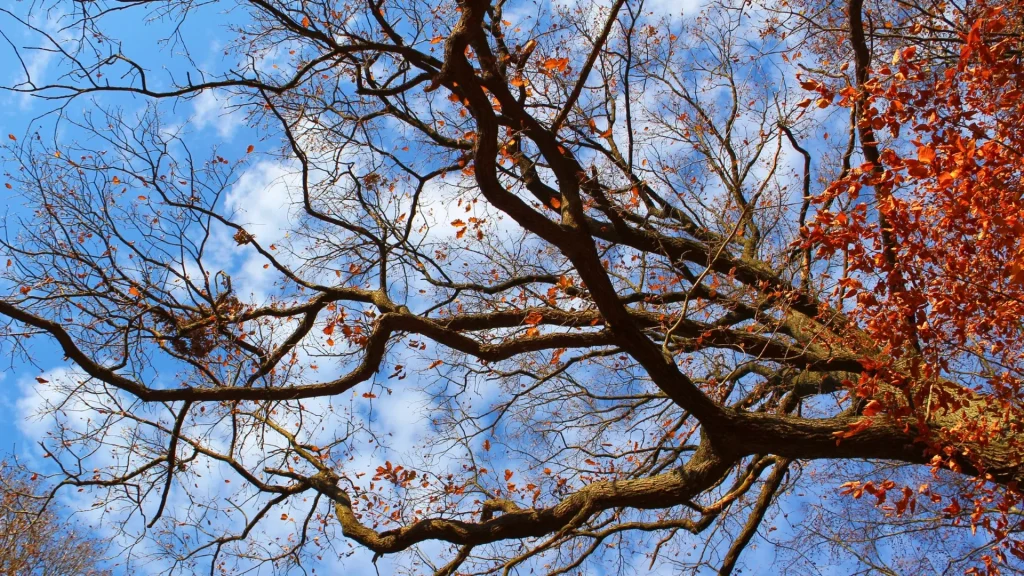
Fall is a gorgeous time of year in Atlanta, when temperatures begin to drop and the leaves take on bright autumn hues. It’s also a crucial time for homeowners and forest managers to check for fall fungal diseases on trees.
Identifying diseases can be challenging, particularly when several large trees shed their leaves simultaneously. However, knowing which fungi appear seasonally in your area makes it easier. In this blog, we’ll review five diseases that commonly appear on Georgia trees in autumn, along with identification tips, impact on trees, and management techniques that tree care specialists use to help trees recover.
1. Oak Wilt
A fungal disease caused by Bretziella fagacearum, oak wilt is responsible for the death of hundreds of thousands of trees every year. All oak trees are susceptible to oak wilt; species in the red oak-black oak group are especially vulnerable, often deteriorating rapidly once infected.
Identification & Symptoms
You can recognize oak wilt in a tree by its premature leaf drop, which usually happens mid-summer when it’s too soon for leaves to fall. Other signs include premature leaf browning, wilting, bark cracks, and fungal mats beneath the bark.
Management
Management of oak wilt varies. In severe cases, the tree may need to be removed entirely to prevent the disease from spreading. Root grafts to prevent below-ground spread, along with other preventive measures such as the use of fungicides, may also be recommended by tree care specialists.
2. Heterobasidion Root Disease
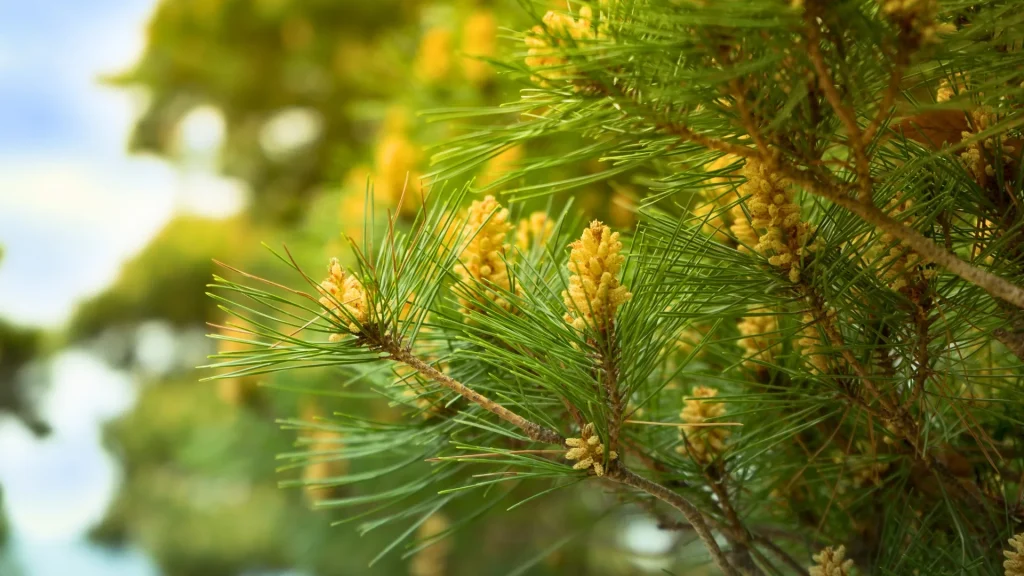
Heterobasidion root disease affects southern pines, especially loblolly and slash pine trees. According to the Georgia Forestry Commission, the root rot, Heterobasidion irregulare, typically lands on top of tree stumps and invades their root systems, which is how the fungal disease spreads to nearby trees.
Identification & Symptoms
Heterobasidion root disease is prevalent throughout Georgia, particularly on trees planted in sandy soils. Infected roots may experience resin-soaking or stringy root decay. Other symptoms include crown thinning, poor needle retention, and windthrow. In advanced stages, this disease can lead to the death of the tree.
Management
Severely infected tree roots must be cleared and regenerated. Prevention methods include protecting stump surfaces and applying treatments to prevent spores from infecting a tree’s roots.
3. Powdery Mildew
This fungal disease is easily recognizable by its white, powdery coating on infected trees and shrubs. It produces mycelium, also known as fungal threads, and thrives in humid conditions.
Identification & Symptoms
Powdery mildew produces white and greyish, powdery spots on tree leaves. In addition, leaves sometimes become distorted and twisted, turn yellow, or fall prematurely. Small fruiting structures may form, indicating the presence of overwintering fungal bodies.
Management
When faced with powdery mildew, homeowners and forest managers should avoid overhead watering and nitrogen fertilizer, as these can exacerbate the damage. Removal of all infected plant parts is also recommended.
4. Hispidus Canker Decay
Hispidus canker decay is another common disease in southern U.S. states. Usually appearing on willow, oak, ash, and hickory trees, hispidus canker decay produces long, partially callused margins in old-growth trees.
Identification & Symptoms
When a tree is infected, its decay is usually extensive. Hispidus cankers typically appear sunken or spindle-like along the stems and branches of trees. The pathogen forms white-yellow or red-brown fruiting bodies that eventually dry out, drop, and turn black.
Management
There is a cure for Hispidus canker decay, according to the Forest Health Guide for Georgia Foresters. Infected branches should be pruned, and completely infected and weakened trees might need to be removed if they are at risk of falling. Otherwise, homeowners and forest managers can apply the usual level of care, fertilizing the surrounding soil and watering as needed.
5. Anthracnose
Anthracnose typically impacts watermelons, cucumber plants, and pecan trees in Georgia, among other plant species, and infections occur in the springtime and resurge in the fall. While this fungal disease does not cause permanent damage to mature trees, proactive management can keep infected and at-risk trees healthy.
Identification & Symptoms
Anthracnose symptoms vary depending on the fungus and plant, but typically include leaf blotches, browning, distortion, and premature drop. You may also find orange-brown blisters on branches.
Management
For minor plant stress, no action is needed. For future control of the disease, crop rotation, proper watering, and the use of rich fertilizer are recommended.
Choose AKA for Pest and Disease Control
Fungal diseases can range from mild to severe and from uncomplicated to complex and difficult to treat. The faster you call a certified tree care company for pest and disease control, the more likely you are to prevent your trees from further weakening.
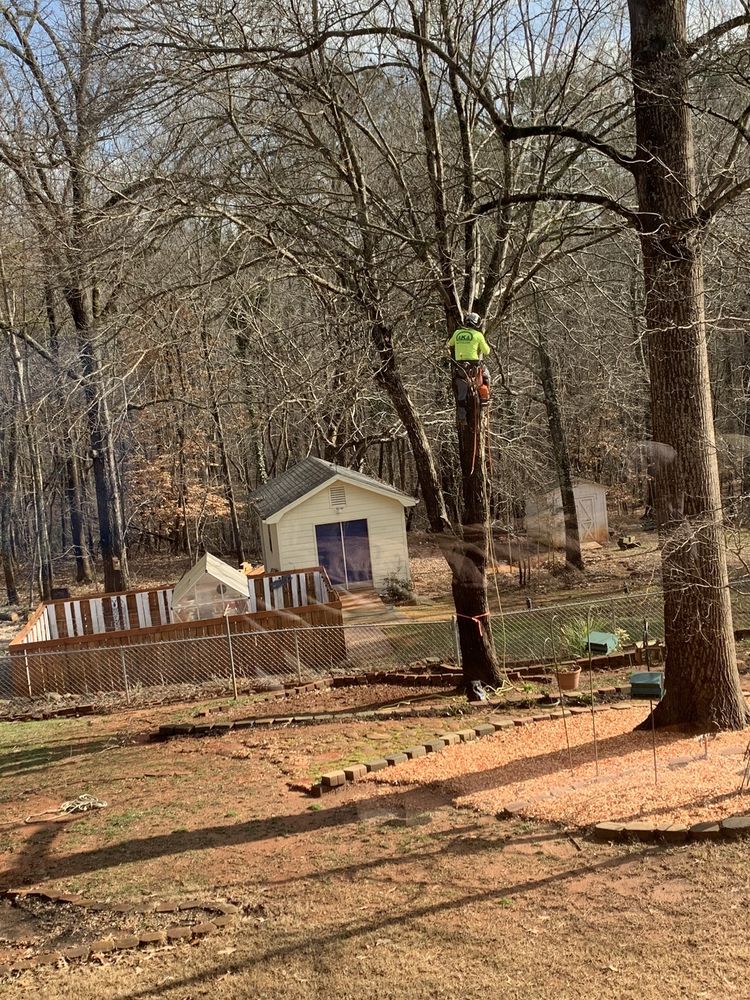
Serving the Atlanta and Nashville metro areas, AKA Tree Service offers the expertise and reliability you need in a tree care partner. With over 10 ISA-certified arborists on staff and 12 years of local experience, we are equipped with the specialized tools and knowledge to tackle your unique tree challenges. Every job includes a comprehensive cleanup, and we handle all necessary permits and communications with local authorities.
Ready to schedule your tree and plant care service? Contact AKA Tree Service today!